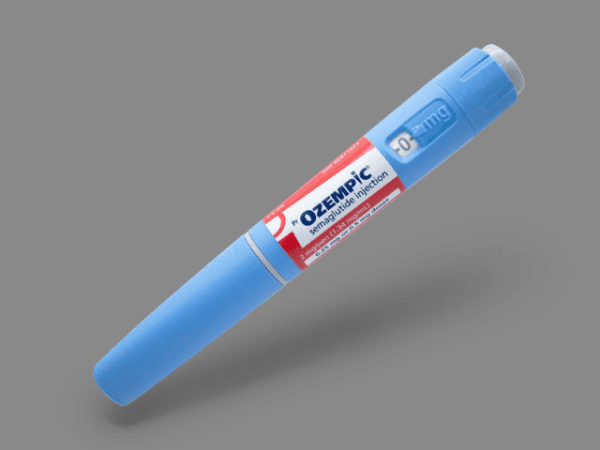
“GLP-1 medications (like Ozempic and Weygovey) can support weight loss by reducing appetite and improving blood sugar control, but they can come with side effects and longer-term considerations, including muscle loss and skin laxity if weight drops quickly. Before starting, ask about suitability, risks, duration, and your maintenance plan. If your goal is targeted shape change rather than significant weight loss, non-invasive body contouring may be a better fit. However for many people a combination of fat freezing and GLP-1s is the perfect combination. ”
Tempted by GLP-1s (Ozempic, Weygovey, Semaglutide)? Read this helpful guide before you decide
If you’re a busy Melbourne mum who’s doing “most things right” and still can’t shift the 10–15kg, GLP-1 medications can look like the first sensible offer you’ve seen in years. And yes, for some people, they genuinely help.
But GLP-1s aren’t a cute little shortcut. They’re a medical decision with trade-offs. Not just nausea and appetite changes. Bigger ones too, like muscle loss and skin laxity when weight drops quickly. And perhaps the most overlooked consideration is the temporary mode of action - once the drug is stopped the benefits subside. This is the calm, grown-up read before you walk into your GP appointment.
You’ll get:
the questions to take to your GP (so you don’t walk out with a script and a stomach full of regret)
the reality of staying on vs coming off
the side effects people don’t think about until they’re living them
where a combination of treatments GLP-1s and fat freezing together can give you perfect outcomes.
where non-invasive body contouring fits if your goal is shape, not major weight loss
What are GLP-1s (and why everyone’s suddenly talking about them)?
GLP-1s are prescription medications that mimic a hormone involved in appetite and blood sugar regulation. In plain English, many people feel less hungry, feel full faster, and eat less without fighting themselves all day.
That’s the appeal. Relief.
But if you’re reading this, you’re probably not chasing a dramatic transformation. You’re chasing quiet. Quiet in your head. Quiet in your jeans. Quiet from the constant internal audit of what you ate, what you didn’t do, what you “should” be able to fix.
GLP-1s can change that experience for some people. They can also create a new kind of stress if you start without a plan.
The part most people skip: what problem are you actually trying to solve?
The internet lumps everything into “weight loss.” Your body doesn’t. “I want to lose weight” can mean three totally different things:
I want health markers to improve (blood sugar, blood pressure, cholesterol, joint pain, energy)
I want the scale to move (overall weight reduction)
I want my shape back (belly, hips, bra bulge, arms, thighs)
If your main pain is shape, GLP-1s might be an expensive, medical way to chase a result you could approach differently. If your main pain is health risk, GLP-1s might be appropriate. You don’t need a pep talk. You need the right tool for the job.
GLP-1 side effects people don’t think about until it’s too late
Most people know about the appetite and tummy stuff. The bigger “wait, what?” side effects tend to show up when weight comes off faster than your body can adapt.
1. Muscle loss (muscle wasting)
When you lose weight, you don’t only lose fat. If you’re eating less (which is the whole point), and you’re not actively protecting protein intake and strength work, your body can lose lean muscle along with fat. That can matter because:
muscle is part of what gives your body shape
muscle supports strength, posture, and metabolism
losing muscle can leave you smaller, but softer
This is why “I just want the scale down” can backfire aesthetically.
2. Metabolism is reduced
With rapid weight loss, your body will think it is in starvation mode and will subsequently reduce your metabolic rate. This is called adaptive thermogenesis. When consumption returns to normal (when tolerance increases or the medication is ceased), the body needs less energy for normal functioning. The additional energy is then stored by the body and is stored as fat. The cells that have shrunk over the treatment period due to caloric deficit refill and return to normal size.
3. Skin laxity (looser skin)
Skin doesn’t always bounce back neatly, especially with:
faster weight loss
age-related collagen changes
motherhood (pregnancy stretches skin, and it doesn’t always return)
genetics
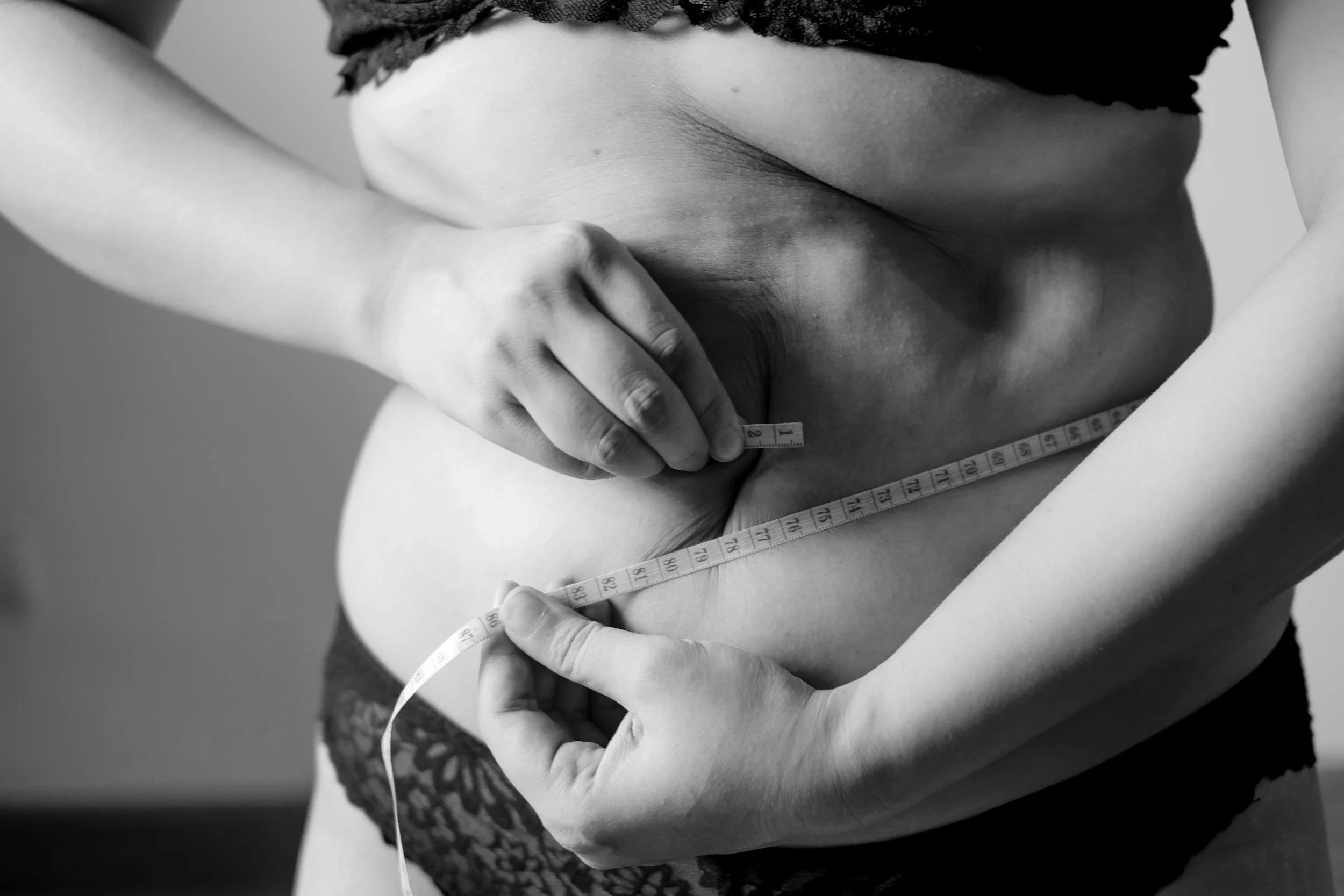
If the volume under the skin reduces quickly, the skin may not tighten at the same pace. That can leave you with a looser look in areas like the tummy, arms, and thighs. Not everyone experiences this the same way. But it’s common enough that it should be part of an adult decision.
4. The obvious stuff: gut side effects and food aversions
Many people report nausea, reflux, constipation or diarrhoea, and feeling “put off” certain foods. Some love that. Some feel miserable. The point is not to scare you. It’s to stop you being surprised.
5. The mode of action is temporary.
Reduced appetite, reduced food noise and reduced weight are all only applicable while the medication is in your system. When you stop the drug, your body returns to what it was pre-treatment. Recent reports indicate that weight regain is 4 x faster than weight loss through diet and exercise alone (most likely due to the metabolic impact/ adaptive thermogenesis - point 2).
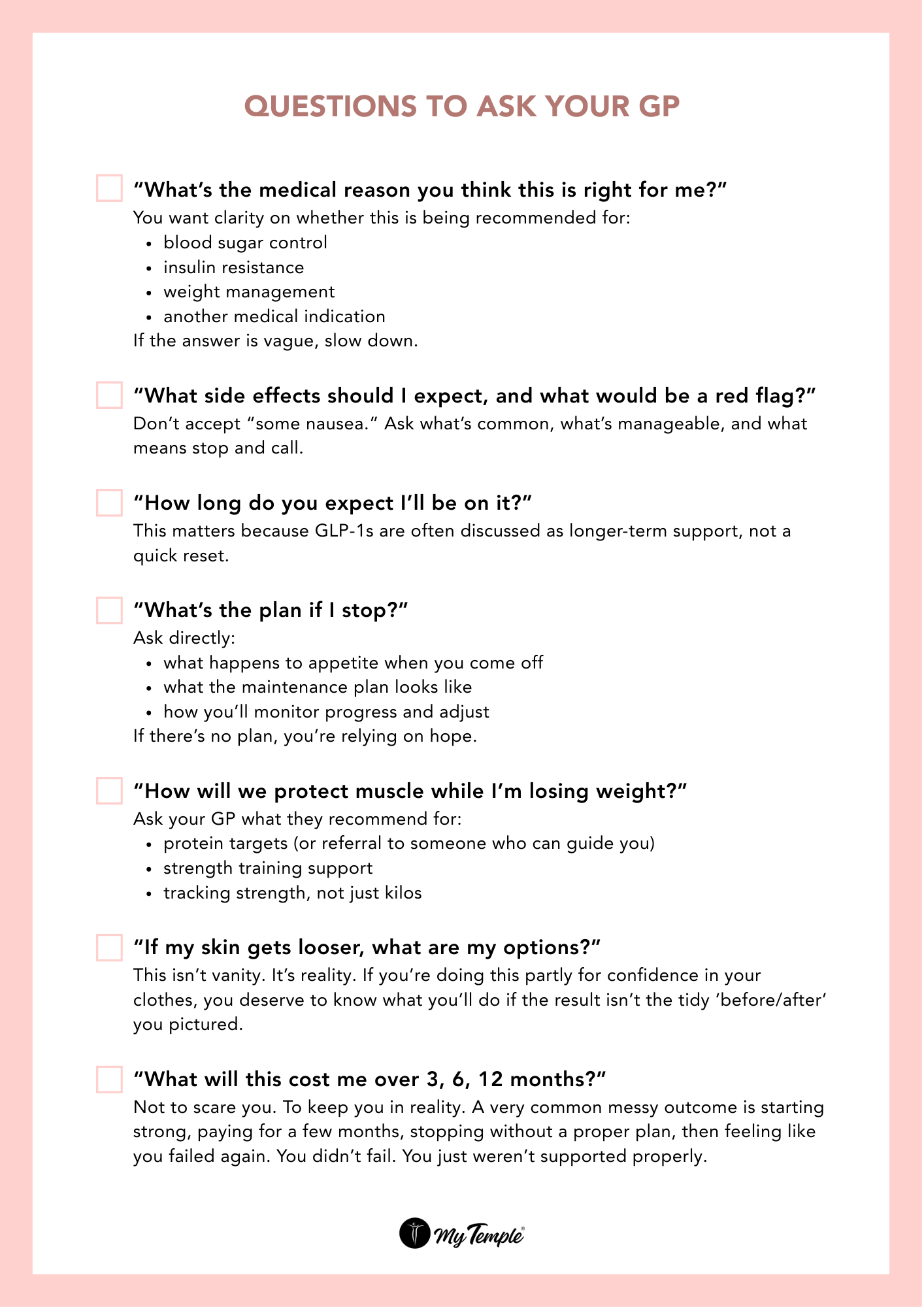
Take this list to your consultation: the questions that stop you getting rushed into a script
If you come off
Many people find appetite returns. That doesn’t mean you’re weak. It means the medication was doing a job.
If the only plan is “I’ll just keep eating less,” you’re back in the old loop. The loop you’re trying to escape.
The better question is: do I have habits and support that can hold me when the medication isn’t doing the heavy lifting?
The belief shift you probably need (and it’s a relief)
Most women in your life stage assume:
“If I could just be more disciplined, I’d fix this.”
No. Your body at 40, 45, 55 is not your body at 25. Stress, hormones, sleep, genetics, life load, and metabolism all matter.
It’s not your fault.
Once you understand what’s driving the problem, you stop choosing options out of desperation.
Staying on vs coming off: the honest reality Here’s what I want you to understand before you start.
If you stay on
You may get ongoing appetite support.
You may also be signing up for ongoing cost and medical management.
You’ll still need a normal-life plan, or it becomes another thing you’re doing to your body rather than with your body.
If you come off
Many people find appetite returns. That doesn’t mean you’re weak. It means the medication was doing a job.
If the only plan is “I’ll just keep eating less,” you’re back in the old loop. The loop you’re trying to escape.
The better question is: do I have habits and support that can hold me when the medication isn’t doing the heavy lifting?
The belief shift you probably need (and it’s a relief)
Most women in your life stage assume:
“If I could just be more disciplined, I’d fix this.”
No. Your body at 40, 45, 55 is not your body at 25. Stress, hormones, sleep, genetics, life load, and metabolism all matter.
It’s not your fault.
Once you understand what’s driving the problem, you stop choosing options out of desperation.
If your goal is shape (not major weight loss), here’s where non-invasive body contouring fits
GLP-1s are a medical tool aimed at overall weight and appetite. Non-invasive body contouring is about targeted change. If your main frustration is:
belly that won’t move even when you’re walking, doing Pilates, eating “pretty well”
hips/love handles that make jeans feel unforgiving
bra bulge that shows up in every fitted top
arms that make you live in long sleeves
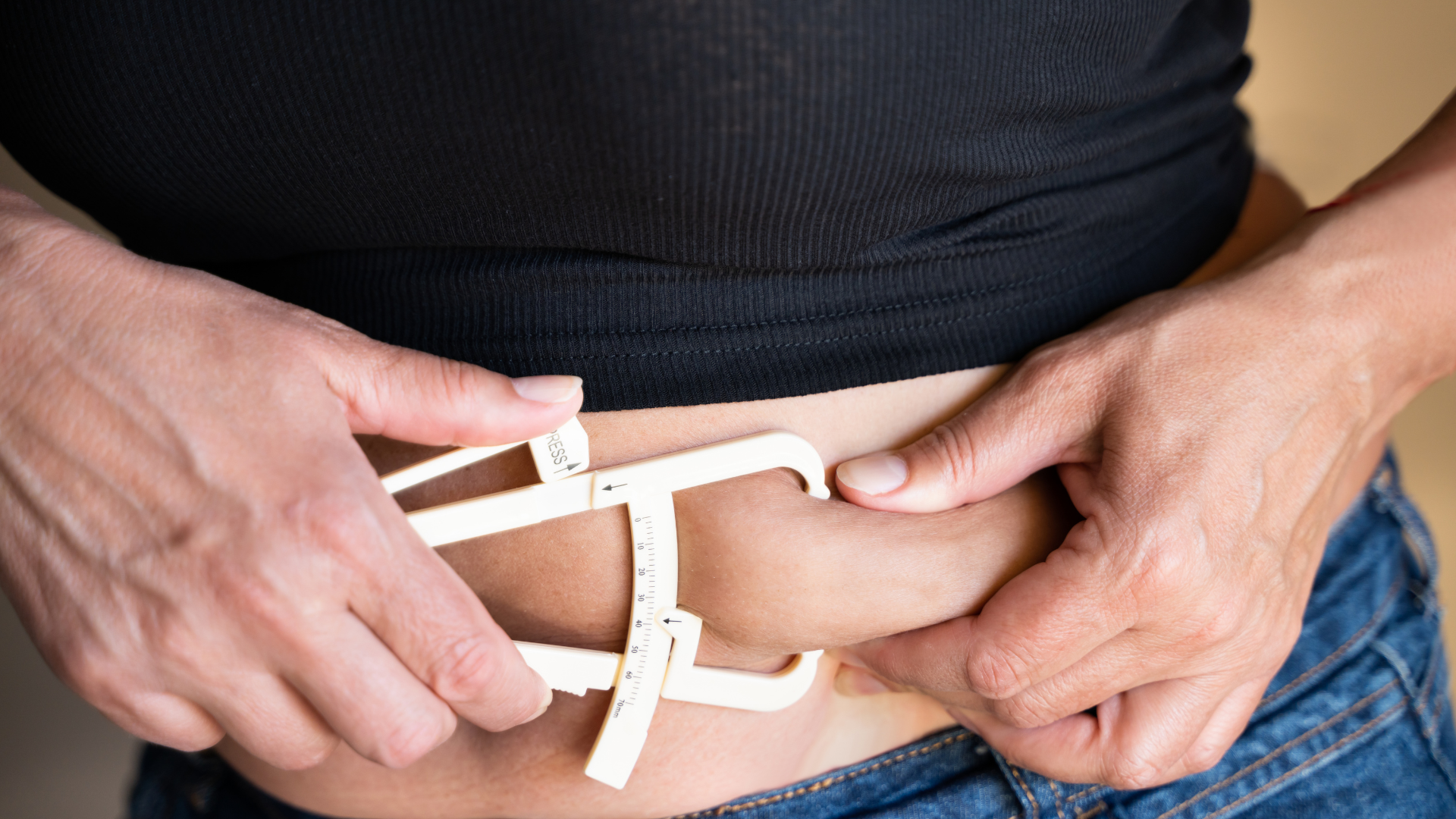
…you’re often talking about subcutaneous fat (the fat you can pinch). At My Temple, we specialise in fat freezing (cryolipolysis), which targets subcutaneous fat through apoptosis, with fat cells then cleared via the lymphatic system over time.
No anaesthetic. No surgery. Minimal downtime. And we’re very clear about what it does and doesn’t do.
A quick choose this if… guide
GLP-1s may be worth discussing with your GP if:
your primary goal is significant overall weight loss
you have health markers that need medical support
you’re prepared for ongoing management and a maintenance plan
Non-invasive body contouring may be a better fit if:
you’re close-ish to your “normal” weight but hate one or two stubborn areas
you want shape change more than scale change
you want a non-invasive option that fits a packed life
you want suitability assessed properly before spending money

If you’re GLP-1 curious, do two things:
Book the GP appointment, but take the questions above. Don’t outsource the decision.
Get clear on what you’re trying to change: health, weight, or shape.
Come and see us - we can talk to you about fat freezing and GLP-1s.
If it’s shape, don’t medicate a contour problem.
What a smart next step looks like
(without turning your life into a project)
Start here: Book a consultation
Key takeaways
GLP-1s can be helpful for some people, but they’re a medical decision with real trade-offs.
Ask about the less-talked-about side effects: muscle loss and skin laxity, especially with faster weight loss.
If your GP can’t answer “how long” and “what happens when I stop,” slow down.
Decide what you’re really solving: health, weight, or shape.
FAQs
-
Ozempic is one brand name commonly associated with GLP-1 medications. “GLP-1” refers to the medication class. Your GP will advise which product is appropriate for your situation and what it’s prescribed for.
-
Many people find appetite returns when they stop. Weight regain can happen, especially if there isn’t a realistic maintenance plan in place. This isn’t a character flaw. It’s a sign the medication was providing meaningful appetite support.
-
It can. If appetite drops and you’re eating less, weight loss may include lean muscle loss as well as fat loss, especially without strength training and adequate protein. Ask your GP how they plan to monitor and protect lean muscle while you’re losing weight.
-
It can, especially when weight loss is faster, and in bodies that have been through pregnancy, ageing, or big weight fluctuations. Skin tightening is not guaranteed. If this matters to you, discuss it upfront so you’re not blindsided.
-
That’s a very normal goal. In that case, targeted body contouring options may be more aligned than a whole-body weight loss tool. The key is matching the tool to the outcome.
-
Fat freezing is designed for subcutaneous fat, not visceral fat. Visceral fat sits deeper around organs and needs a different health-focused plan. A proper consultation should cover this clearly.