Subcutaneous Fat vs Visceral Fat: What's the Difference and How Does Fat Freezing Work?
You've put in the work. You're eating better, moving more, and the results are showing except for one area that just won't shift, no matter what you try. If that sounds familiar, you're not imagining it, and you're definitely not alone.
This is one of the most common things we hear from clients at My Temple, and it's also one of the most misunderstood parts of weight loss. So let's clear it up.
What Is Body Fat?
Body fat is not your enemy. Fat tissue plays an essential role in keeping us alive. It stores energy, helps regulate hormones, cushions our organs, insulates the body and supports many normal physiological processes. Problems arise when we accumulate more fat than our body requires or when fat is stored in locations that increase our health risk.
What Is Subcutaneous Fat?
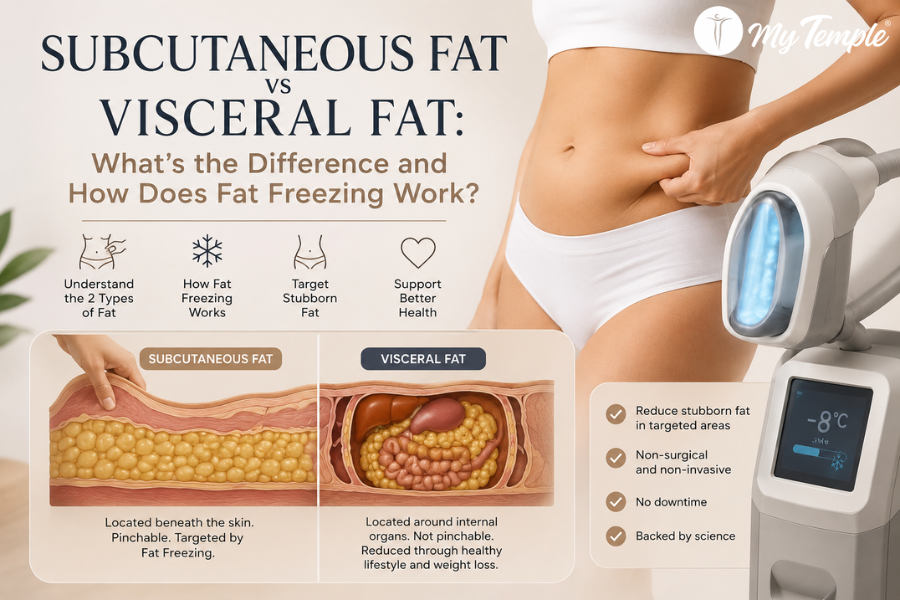
Subcutaneous fat is the layer of fat that sits directly beneath the skin.
It is the fat you can pinch with your fingers around your abdomen, thighs, hips, upper arms, back or under the chin. This layer acts as insulation, provides cushioning and serves as the body's largest energy reserve.
From a cosmetic perspective, subcutaneous fat is usually what people notice when clothing feels tighter or when certain body areas appear fuller than they would like. Importantly, fat freezing is designed to treat subcutaneous fat.
What Is Visceral Fat?
Visceral fat is stored much deeper within the abdomen. Rather than sitting beneath the skin, it surrounds organs such as the liver, pancreas and intestines. Because it lies beneath the abdominal muscles, you cannot pinch visceral fat or directly treat it with body contouring procedures.
Visceral fat is metabolically active and, when present in excess, is associated with an increased risk of conditions including:
Type 2 diabetes
Heart disease
High blood pressure
Fatty liver disease
Insulin resistance
Metabolic syndrome
The most effective ways to reduce visceral fat are through an overall reduction in body fat, achieved by creating an energy deficit through nutrition, physical activity, adequate sleep and other healthy lifestyle strategies. Some people may also reduce visceral fat with medically supervised weight-loss treatments when appropriate.
Why Do Some Areas Seem More Difficult to Change?
This is one of the most misunderstood aspects of weight loss. When you lose body fat, fat cells throughout your body shrink as the stored fat inside them is used for energy. Your body does not selectively empty fat cells from one particular area while leaving others untouched.
However, not every part of the body contains the same number of fat cells. If you naturally have a greater concentration of fat cells around your abdomen than your arms or legs, those abdominal areas may still appear relatively fuller, even after successful weight loss. The fat cells have become smaller, but there are still more of them in that region. This is why many people lose weight successfully yet remain frustrated by localised pockets of fat.
How Fat Freezing Works
Fat freezing, also known as cryolipolysis, works differently from weight loss. Instead of shrinking fat cells, fat freezing targets selected subcutaneous fat cells by exposing them to carefully controlled cooling. The cooling damages the targeted fat cells while protecting the surrounding skin, muscles, nerves and other tissues. Over the following weeks, your body's natural inflammatory and immune processes identify these damaged fat cells and gradually remove them. The cellular contents are broken down and processed naturally by the body.
The important distinction is this:
Weight loss reduces the size of fat cells throughout the body.
Fat freezing reduces the number of fat cells within the treated area.
This is why fat freezing is considered a body contouring treatment rather than a weight-loss treatment.
Who Is Fat Freezing Suitable For?
Fat freezing is best suited to people who:
Have localised areas of pinchable subcutaneous fat.
Are close to, or working towards, a healthy body weight.
Want to improve body shape rather than achieve significant weight loss.
Prefer a non-surgical alternative to liposuction.
It is not designed to treat obesity or reduce visceral fat.
Weight loss and Fat Freezing Can Complement Each Other
Many people think they need to choose between losing weight and having fat freezing. In reality, they work in different ways.
Weight loss reduces the size of fat cells across your entire body, improving overall health and reducing both subcutaneous and visceral fat. Fat freezing can then be used to reduce the number of fat cells in specific areas where someone would like improved body contour.
Understanding this distinction helps set realistic expectations and explains why fat freezing is not a substitute for healthy lifestyle habits—it is a complementary body contouring treatment.
Learn More in “Why Can't I Lose Weight?”
One of the reasons I wrote “Why Can't I Lose Weight?” was to help people understand the science behind body fat, metabolism and weight regulation without the confusing jargon.
With a Degree in Nursing, experience in operating theatres and cosmetic clinics, and then founder of My Temple, I've spent years helping people understand why their bodies behave the way they do. Through thousands of client consultations, I've seen how much confusion exists around fat loss, metabolism and body contouring.
In the book, I explain topics including:
The different types of body fat and what they do.
Why fat cells grow, shrink and multiply.
How metabolism changes throughout life. T
he effects of hormones during perimenopause and menopause.
The science behind fat freezing, GLP-1 medications, exercise and other weight-management strategies.
Practical, evidence-based approaches to improving your health.
My aim isn't simply to explain how to lose weight. It's to help you understand your body so you can make informed decisions based on science rather than myths.
Thinking About Fat Freezing?
If you're considering fat freezing, the first step is determining whether the area you'd like to treat is made up of subcutaneous fat and whether you're a suitable candidate.
At My Temple, every consultation includes an individual assessment so we can recommend the treatment approach that best matches your goals. Because when you understand the science behind your body, you're in a much better position to make choices that work for you.