Can Fat Freezing Cause Skin Tightening? The Science Behind Cryolipolysis Explained
Short answer: Yes, it can - but that’s not actually what fat freezing was designed to do.
Fat freezing (also known as cryolipolysis) is a scientifically proven treatment that permanently removes targeted fat cells from the treated area. Interestingly, many people also notice their skin feels firmer after treatment. While skin tightening isn’t the primary purpose of fat freezing, there are biological reasons why some clients experience improvements in skin firmness.
Let’s explore the science behind fat freezing and why some people notice tighter-looking skin afterwards.
What Is Fat Freezing?
Fat freezing, or cryolipolysis, is a non-surgical body contouring treatment that selectively targets fat cells using controlled cooling.
Unlike dieting, which simply shrinks fat cells throughout the body, fat freezing damages a portion of the fat cells in a specific treatment area. Over the following weeks, your body naturally identifies these damaged cells as no longer functioning properly and gradually removes them through normal metabolic processes.
Once these targeted fat cells have been eliminated, they do not regenerate.
This is why fat freezing is considered a body contouring treatment rather than a weight loss treatment. It reduces the number of fat cells in a specific area rather than changing the size of fat cells throughout your body.
Let’s review this client’s fat freezing results.
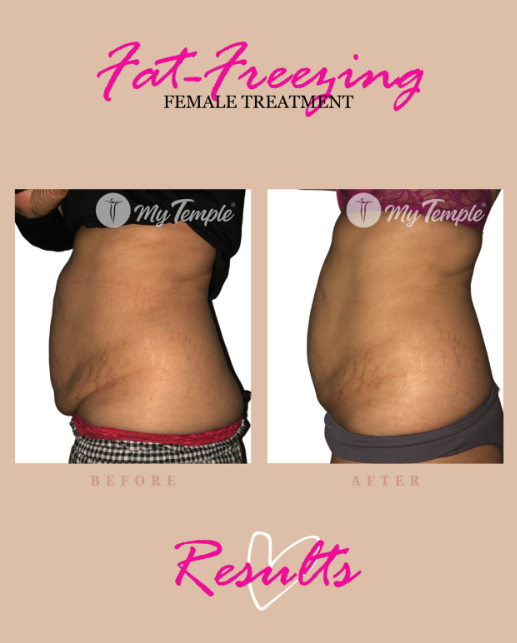
Our client’s picture here had one session of fat freezing (4 applicators in a diamond shape around her abdomen. This image was her results at 12 weeks post-treatment.
This lady was in her mid 40’s and had a moderate amount of subcutaneous fat around her abdomen and multiple stretch marks due to pregnancy. The results of her fat freezing treatment with the reduction in the number of fat cells has allowed the area to lift and the skin to retract to a new smaller shape. The decreased weight of the fat cells combined with the less number of fat cells across her belly has provided what appears to be tightened skin. We did not conduct investigations into the skin tightness prior to or after the fat freezing treatment however it is evident that there is a significant difference on her abdomen shape with the skin matching this new shape perfectly.
See more results here: Fat Freezing Results
We could potentially conduct another treatment across her lower belly with much confidence that there will be no loose skin afterwards however this is because we have allowed her body to respond fully to the initial treatment prior to making this recommendation. Because fat freezing is permanent – at My Temple - we operate with caution and give the body the time it needs physiologically to respond to treatment before we recommend further treatments. However in this case as her skin has retracted nicely and there is no evidence of loose skin we would be confident in treating this area again.
So then - How Does Fat Freezing Actually Work?
Fat cells are surprisingly sensitive to cold.
When exposed to carefully controlled temperatures for a specific period, the fat cells undergo a process known as apoptosis, or programmed cell death.
This is very different from injury or tissue destruction.
Instead of bursting open or causing widespread damage, the affected fat cells begin an organised process of shutting themselves down.
Over the following weeks:
· The damaged fat cells trigger a mild inflammatory response.
· Immune cells, particularly macrophages, begin removing the damaged fat cells.
· The fat is broken down naturally by the body.
· The remaining healthy tissue is preserved.
· Gradually, the treated area becomes slimmer.
Clinical studies show that this process continues for approximately 12 weeks following treatment, although many people begin noticing changes earlier.
So Why Does the Skin Sometimes Feel Tighter?
This is where things become really interesting.
Although cryolipolysis was developed to reduce fat—not tighten skin—the body’s natural healing response may contribute to improvements in skin firmness.
When fat cells undergo apoptosis, the surrounding tissues experience a mild, controlled inflammatory response.
This isn’t harmful inflammation. Instead, it’s part of your body’s normal repair process.
During healing, your body begins producing new structural proteins including:
· Collagen
· Elastin
· Extracellular matrix proteins
Collagen provides strength and structure to the skin, while elastin helps skin stretch and return to its original shape.
As this remodeling occurs, some patients experience subtle tightening of the skin over the treated area.
What Does the Research Show?
Several clinical studies have observed improvements in skin firmness following cryolipolysis.
Researchers believe this may occur through several mechanisms:
· Mild stimulation of collagen production.
· Remodelling of connective tissue.
· Reduction in the underlying fat volume, allowing the skin to contract more effectively.
· Natural wound-healing processes that strengthen the treated tissues.
It’s important to understand that these effects are generally considered a secondary benefit, not the primary purpose of treatment.
The amount of tightening varies considerably between individuals.
Who Is Most Likely to Notice Skin Tightening?
Some people notice quite a significant improvement, while others notice very little.
Several factors influence the outcome.
Age - Younger skin generally contains more collagen and elastin, making it more capable of contracting after fat reduction.
Skin Quality - People with good skin elasticity often achieve the best cosmetic results because their skin naturally adapts to the reduction in fat volume.
Amount of Fat Removed - Reducing a moderate amount of fat often allows the skin to contract smoothly. However, removing large volumes of fat—whether through weight loss, surgery or body contouring—may leave excess skin that cannot contract sufficiently on its own.
Genetics - Collagen production, skin elasticity and ageing vary significantly between individuals. Two people receiving identical treatments can experience different levels of skin tightening.
Will Fat Freezing Leave Loose Skin?
This is one of the most common questions we hear.
For most suitable candidates, the answer is usually no.
Because fat freezing removes fat gradually over several months, the skin has time to adapt to the changing body contour.
This gradual reduction differs significantly from rapid weight loss or bariatric surgery, where large amounts of fat can disappear much faster than the skin can respond.
However, people who already have significant loose skin before treatment may still require dedicated skin tightening procedures to achieve their desired result.
Read more here: Skin Tightening
When Fat Freezing Alone May Not Be Enough
Fat freezing is designed to reduce fat—not treat severe skin laxity.
If your primary concern is:
· loose abdominal skin
· crepey skin
· skin after pregnancy
· loose skin following major weight loss
· age-related skin laxity
then combining fat freezing with dedicated skin tightening treatments may produce better overall results.
These treatments work differently.
Rather than targeting fat cells, they stimulate collagen production directly within the deeper layers of the skin, helping improve firmness and elasticity over time.
Why We Often Combine Fat Reduction and Skin Tightening
Think of your body like a mattress.
The fat underneath is the filling.
The skin is the fabric covering.
If you reduce some of the filling, the fabric may naturally tighten—but only if it has enough elasticity.
If the fabric has already stretched significantly over many years, it may benefit from treatments specifically designed to strengthen and tighten it.
That’s why combining fat reduction with collagen-stimulating skin tightening can often produce more comprehensive body contouring results.
Fat Freezing Is Not a Weight Loss Treatment
One of the biggest misconceptions about fat freezing is that it helps people lose weight.
It doesn’t.
When you lose weight through diet, exercise or medications such as GLP-1 therapies, the fat cells throughout your body become smaller.
When you undergo fat freezing, a portion of the fat cells in the treated area are permanently removed.
These are two completely different biological processes.
Understanding this difference helps set realistic expectations and usually leads to much better long-term satisfaction with treatment.
The Bottom Line
Yes, fat freezing can contribute to skin tightening in some people.
The improvement is thought to occur because the body’s natural healing response after cryolipolysis may stimulate collagen remodelling while the skin gradually adapts to the reduction in fat volume.
However, it’s important to remember that cryolipolysis is a fat reduction treatment first. Any improvement in skin firmness should be considered an additional benefit rather than the primary goal.
If your main concern is loose or ageing skin, dedicated skin tightening treatments may provide a more noticeable improvement—or may be used alongside fat freezing for optimal body contouring.
Want to Learn More?
At My Temple, we believe understanding why treatments work is just as important as the treatment itself.
If you’re considering fat freezing, we recommend first understanding the science behind fat cells, metabolism, weight loss and body contouring.
Our founder, Linda Pickett (Bachelor of Nursing), explores these topics in her book, Why Can’t I Lose Weight?, which explains the biology of fat, why different treatments work, and how to choose the most appropriate approach for your goals.
If you’re unsure whether fat freezing, skin tightening—or a combination of both—is right for you, book a consultation with our team. We’ll assess your body composition, skin quality and goals to create a treatment plan tailored specifically to you.