Fat Freezing or Fat Cavitation: Which Treatment Works Better for Stubborn Fat?
If you’re researching non-surgical fat-reduction treatments, you’ve probably come across cryolipolysis (fat freezing) and fat cavitation. Both are popular in Melbourne, but the results they deliver are not the same. In fact, one is clinically proven to permanently remove fat cells — while the other offers more temporary smoothing.
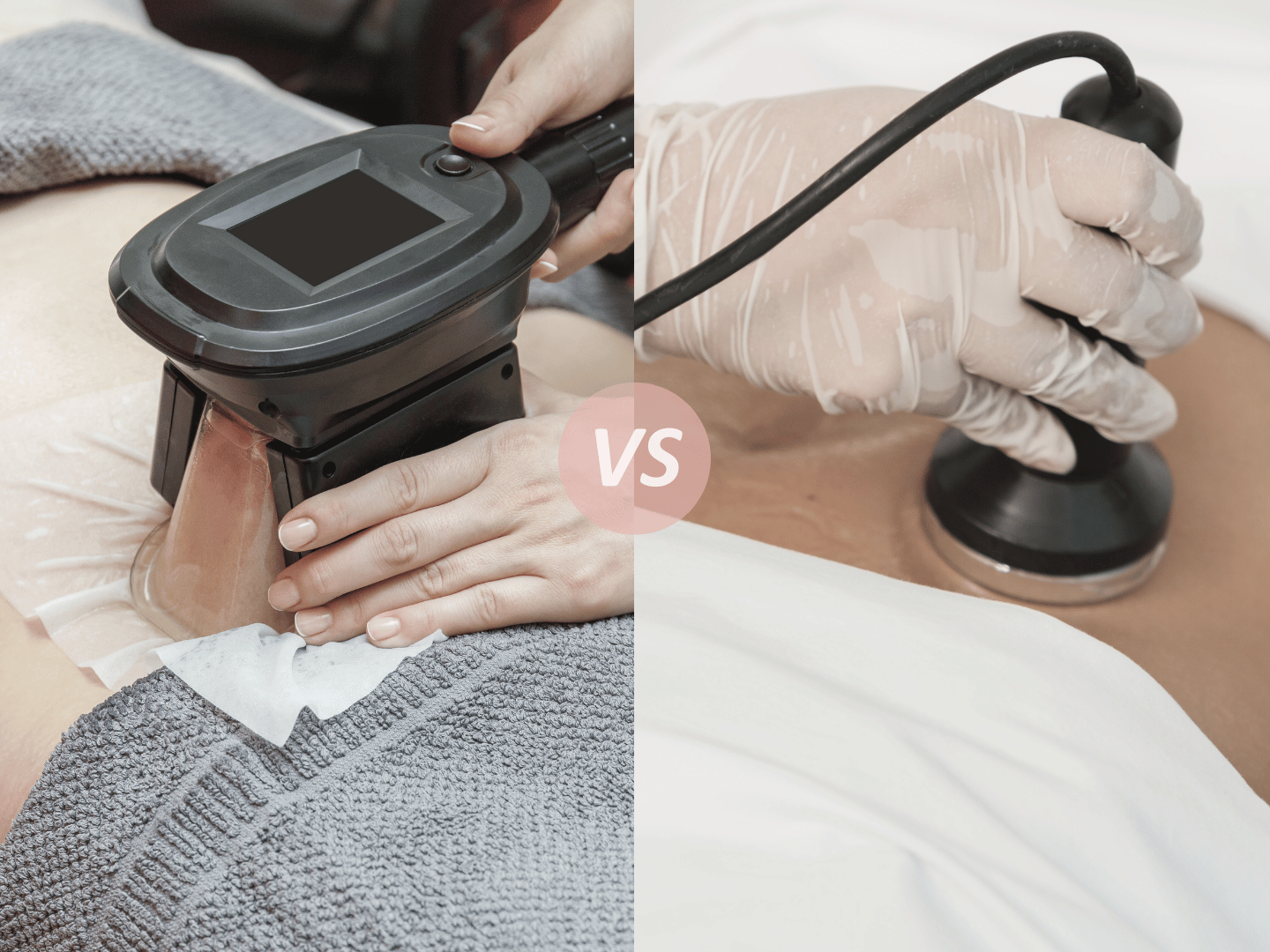
Here’s the real, science-backed comparison so you can choose the treatment that’s right for your body.
What Is Fat Freezing? (Cryolipolysis)
Fat freezing uses controlled cooling to crystallise and destroy fat cells. These dead cells are then removed naturally through your lymphatic system over 8–12 weeks.
Multiple clinical studies show up to 25% fat-layer reduction per session, with long-lasting results.
Key benefits of fat freezing:
Permanent fat cell removal
Results after 1–2 sessions
FDA/TGA cleared, clinically proven
Ideal for tummy, love handles, bra rolls, thighs and hormonal belly fat
Predictable and reliable outcomes
Suitable for peri-menopausal women, post-GLP-1 clients, and people with stubborn genetic fat
What Is Fat Cavitation?
Fat cavitation uses low-frequency ultrasound waves to “vibrate” fat cells so they release their contents. This can soften and smooth the area, but it’s unclear whether fat cells are actually destroyed.
Most evidence suggests cavitation shrinks fat cells rather than removes them — meaning results can reverse if fat cells refill.
Cavitation may offer:
Temporary smoothing
Mild fat-softening
A warm, massage-like treatment experience
Short-term results that require multiple sessions
Fat Freezing vs Fat Cavitation: The Biggest Differences
1. Permanent Fat Loss vs Temporary Shrinking
Fat freezing eliminates fat cells permanently.
Cavitation deflates them, and they can refill.
2. Proven Results vs Variable Outcomes
Fat freezing is supported by strong clinical research.
Cavitation results vary widely and fade without maintenance.
3. Works on Stubborn, Hormonal & Genetic Fat
Fat freezing targets deep, resistant fat — the kind that appears with age, stress, menopause or genetics.
Cavitation is limited to superficial, soft fat.
4. Fewer Sessions, Better Value
Most fat freezing clients need 1–2 treatments per area.
Cavitation typically requires 6–12 sessions.
Who’s got time to return for 6 sessions? We are all busy, so a once-and-done session is optimal.
5. Visible Contouring
Fat freezing sculpts real shape and definition.
Cavitation mostly smooths.
So, Which Treatment Is Better?
For long-lasting, measurable fat reduction, fat freezing is the clear winner. It permanently removes fat cells, produces consistent results, and is backed by science.
Fat cavitation has its place — especially for mild smoothing or lymphatic support — but it’s not a true fat-loss treatment.
If you’re ready to reduce stubborn fat, shape your body and get results that actually last, fat freezing offers the most effective and reliable outcome.
Want help choosing the right treatment for your body?
Book a consultation at My Temple Fat Freezing Specialists in Melbourne.
We’ll guide you based on your goals and expected outcomes, drawing on our 8 years of experience.
For more in-depth information about fat cavitation and fat freezing, visit our page: Fat Freezing vs Fat Cavitation.
Or download our FREE e-book: Trimming the Fat to learn more in detail about the top 15 most popular weight loss treatments.